Our Solution
We provide best services
The latest RFID technology
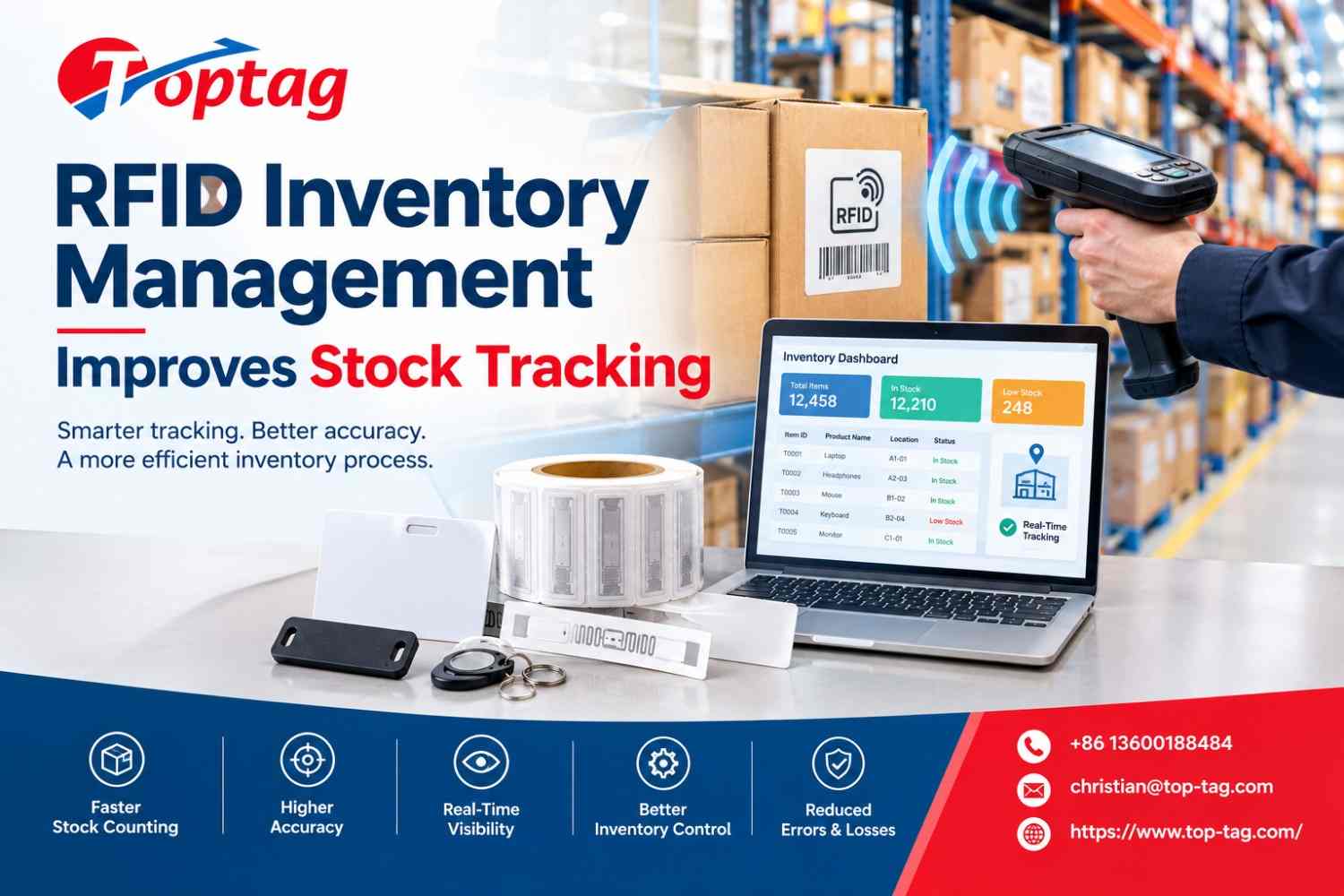
Our full RFID solutions integrate labels, hardware, and software to enhance inventory management and tracking efficiency at the item level.
Enhance your Labels
Achieve maximum security for high-theft merchandise with our Alpha solutions and our RF Antennas to provide comprehensive protection.
Enhance your Labels
Our innovative Apparel Labeling Solutions offer retailers and brand owners a single source of truth for intelligent labeling.
Tag your products at source
Our source tagging solution offers a wide range of labels to meet various application needs efficiently.

About Us
RFID Tags & Solutions - Toptag
Shenzhen TopTag Technology Co., Ltd is established in 2008, as a leading RFID manufacturer with a wide range of products and services to offer. With years of experience in the industry, We have built a strong reputation for providing high-quality RFID products and services to businesses of all sizes and industries. Our products range from RFID tags, labels, cards, and wristbands to RFID readers, antennas, and software solutions. We offer a variety of customization options to ensure that our products meet your specific needs and requirements.

38+
Experience Members
32+
Satisfied Customers
1800+
Happy Customer
our product
Product showcase



our faq
GET EVERY ANSWER
Our prices are subject to change depending on supply and other market factors. We will send you an updated price list after your company contact us for further information.
Different frequencies have different characteristics that make them more useful for different applications. For instance, low-frequency tags are cheaper than ultra high frequency (UHF) tags, use less power and are better able to penetrate non-metallic substances. They are ideal for scanning objects with high-water content, such as fruit, at close range. UHF frequencies typically offer better range and can transfer data faster. But they use more power and are less likely to pass through materials. And because they tend to be more “directed,” they require a clear path between the tag and reader. UHF tags might be better for scanning boxes of goods as they pass through a bay door into a warehouse. It is probably best to work with a consultant, integrator or vendor that can help you choose the right frequency for your application
Just as your radio tunes in to different frequency to hear different channels, RFID tags and readers have to be tuned to the same frequency to communicate. RFID systems use many different frequencies, but generally the most common are low- (around 125 KHz), high- (13.56 MHz) and ultra-high frequency, or UHF (850-900 MHz). Microwave (2.45 GHz) is also used in some applications. Radio waves behave differently at different frequency, so you have to choose the right frequency for the right application.
RFID is not necessarily “better” than bar codes. The two are different technologies and have different applications, which sometimes overlap. The big difference between the two is bar codes are line-of-sight technology. That is, a scanner has to “see” the bar code to read it, which means people usually have to orient the bar code towards a scanner for it to be read. Radio frequency identification, by contrast, doesn’t require line of sight. RFID tags can be read as long as they are within range of a reader. Bar codes have other shortcomings as well. If a label is ripped, soiled or falls off, there is no way to scan the item. And standard bar codes identify only the manufacturer and product, not the unique item. The bar code on one milk carton is the same as every other, making it impossible to identify which one might pass its expiration date first.