

RFID Cards & Keyfobs for Access Control Solutions
Each time that you swipe your card to gain entry to the office or check in to your hotel room, you are accessing technology that is silently replacing the use of physical keys and swipe cards. RFID cards are much more efficient than physical keys and difficult to replicate. When you need access cards for your office, or RFID keyfob access, then knowing which will work best for your application is helpful when buying them.
What Are RFID Cards?
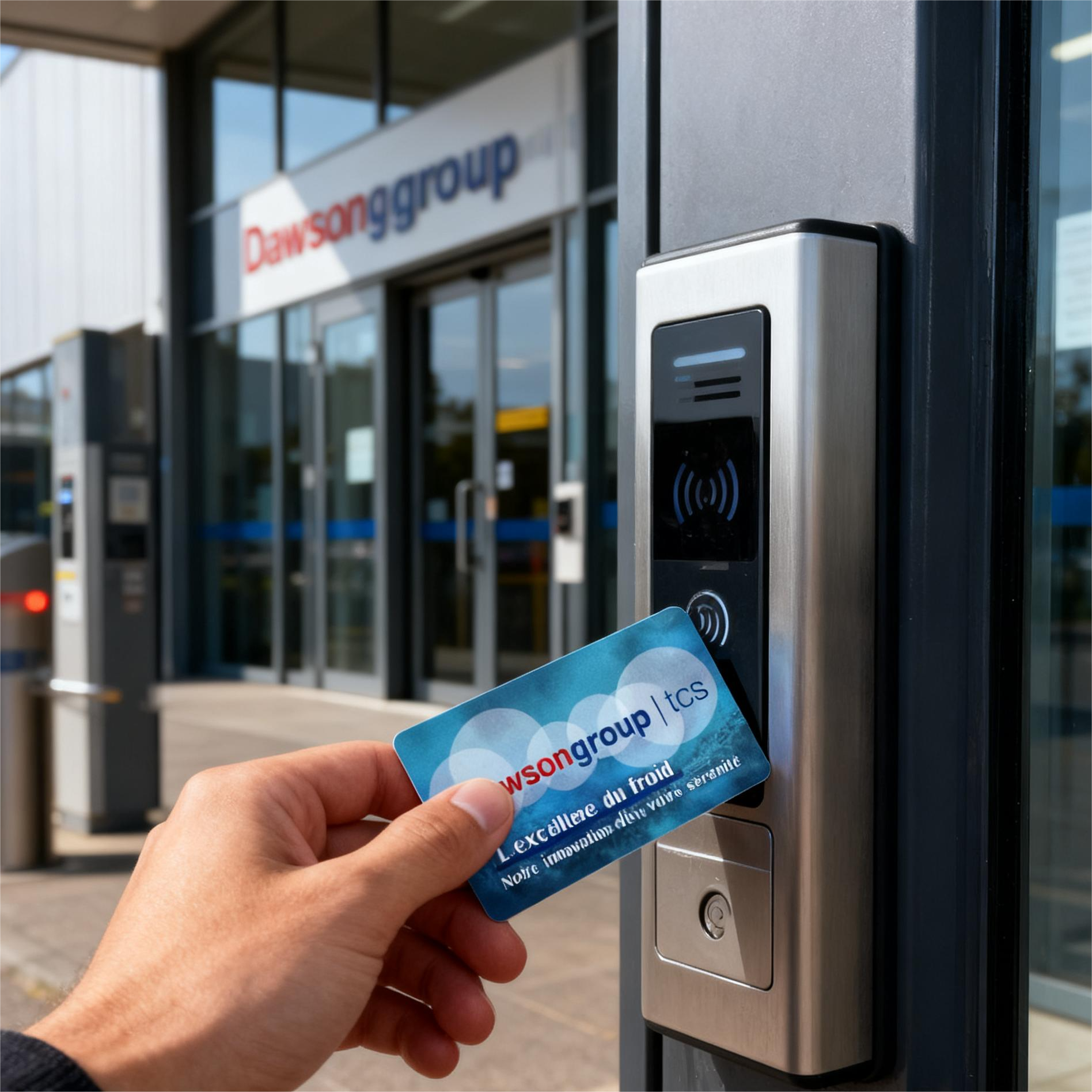
An RFID card is a small, credit-card-sized device with an embedded chip and antenna that communicates wirelessly with a reader. No swiping or insertion; you just have to get the card close to the reader to exchange signals that verify your identity or give you access.
The frequency of RFID cards is different for different applications. There are low-frequency (125kHz) cards for basic access control and high-frequency (13.56MHz) cards for encryption and multi-applications. There are also ultra-high-frequency (UHF) cards which are suitable for long-distance tracking such as vehicle access or warehouse logistics. Since every RFID card has a unique ID number, companies can monitor exactly who entered what place and when.
Types of RFID Cards & Keyfobs
Standard RFID Cards
A standard RFID tag card is built for everyday access and identification. Made from PVC or PET, these cards can be printed with a company logo, employee photo, barcode or QR code. Many businesses use a single RFID tag card for building entry, cafeteria payments, and printer authentication at once, cutting down on how many cards employees carry.
Standard cards support chip protocols like Mifare Classic, NTAG, and DESFire, so they can be configured for basic entry systems or encrypted environments alike.
RFID Keyfobs
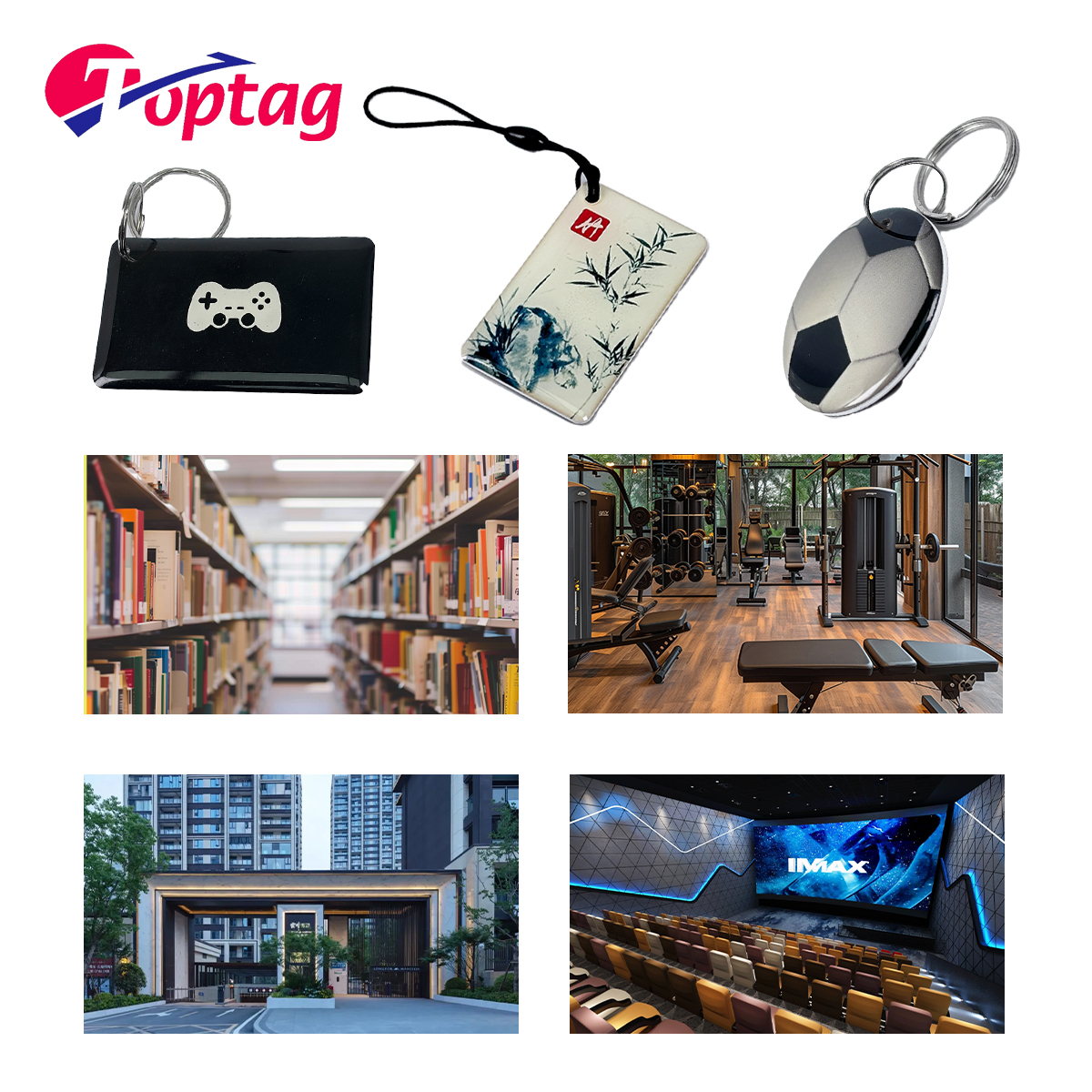
For businesses that prefer something more compact than a card, an RFID keyfob attaches directly to a keyring, making it harder to misplace. RFID keyfobs work on the same frequencies as cards — 125kHz, 13.56MHz, or UHF — and each one carries a globally unique ID.
RFID keyfob access systems are popular in gyms, storage facilities, and residential buildings where durability matters more than printable branding. The waterproof ABS or epoxy casing survives daily wear, and custom enclosures, antenna shapes, and anti-counterfeiting features are also available.
RFID Card Features & Technology
RFID Chip & Barcode Integration
Many organizations still rely on barcodes for certain processes, which is why combining RFID chip barcode technology onto one card has become a practical solution. This hybrid approach lets staff scan a card the traditional way as a backup while still using the embedded chip for automatic recognition — useful for libraries, event ticketing, and retail loyalty programs.
RFID tagging across an RFID chip barcode card also simplifies asset and attendance tracking, since one scan pulls both barcode data and the chip's unique ID into a single record, reducing manual entry errors.
NEMA RFID Cards
The NEMA cards RFID systems are designed to be durable in an industrial environment by meeting the standards of durability for facilities subjected to moisture, temperature changes, or rough use. The NEMA cards RFID systems are usually used in places such as manufacturing plants and outdoor locations that may damage regular consumer cards.
RFID Cards for Different Applications
Access Control & Building Security
Employees or residents tap a card or keyfob to unlock doors, elevators, or parking gates. Access logs give facility managers a clear record of entry and exit times, useful for security audits and emergency tracking.
Employee & Student ID Cards
Universities and corporate campuses often combine identification with access rights on a single RFID card, printed with a photo, name, and department. Students use the same card for library access, dorm entry and meal plans, while employees use theirs for building access and time-tracking.
Hotel Key Cards
Hotels have largely moved away from magnetic strip keys in favor of RFID key cards which are faster to program and cheaper to replace in bulk. Guests simply tap the card at the door and staff can reprogram lost cards in seconds without changing the lock.
Membership & Loyalty Cards
Gyms, clubs and retail loyalty programs use RFID-enabled cards to identify members instantly at checkout, speeding up service and tracking visit or purchase history.
Cashless Payment Systems
From vending machines to campus dining halls, an RFID card increasingly doubles as a prepaid payment tool. Users load funds onto the card, and transactions process with a simple tap — no cash or PIN required for smaller purchases.
RFID Card Accessories
RFID Card Holders
A good RFID card holder protects the embedded chip and antenna from physical damage that can interfere with the read range. Professionals who have several access cards like slim holders keep them all organized without adding extra bulk.
RFID Card Sleeves & RFID Blocking Protection
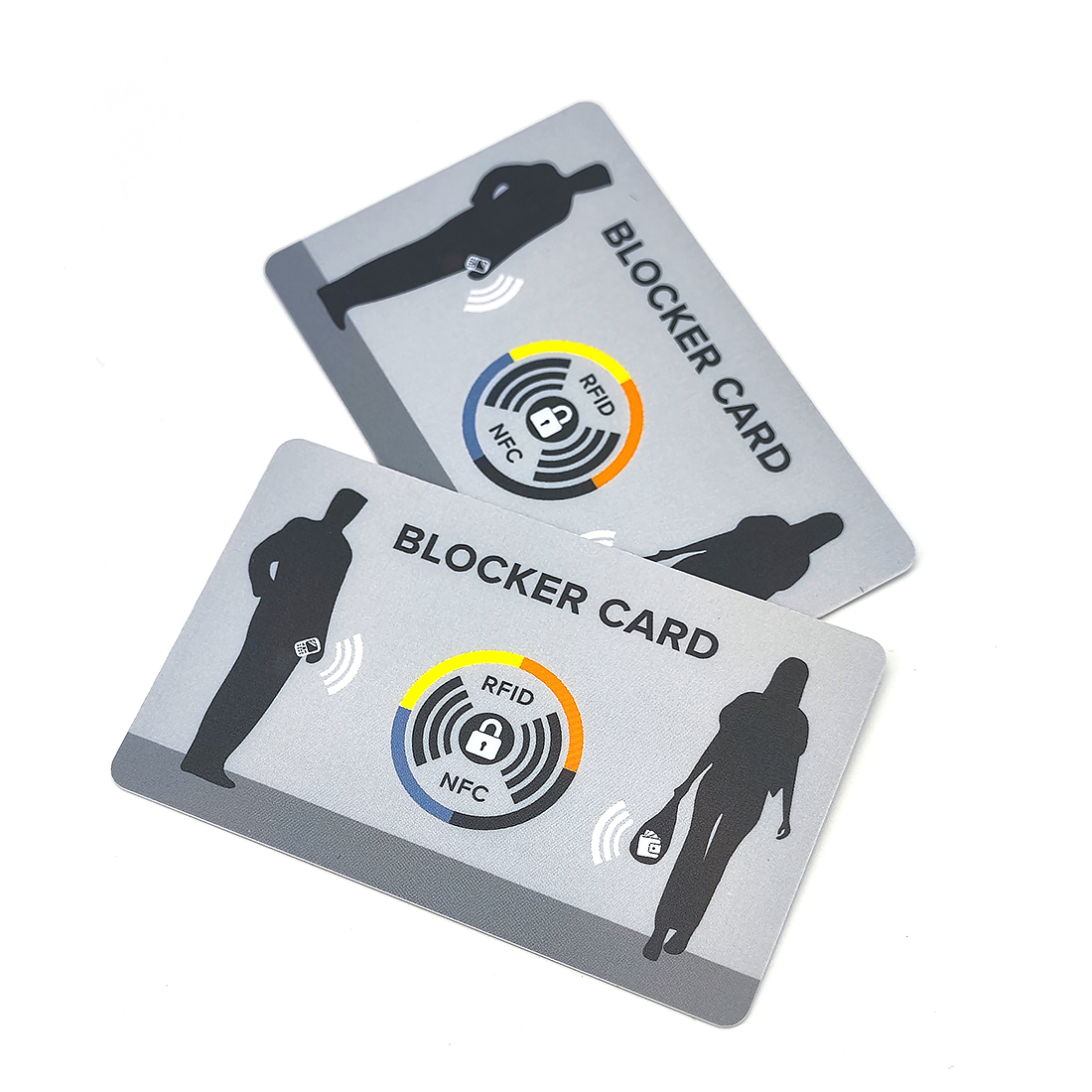
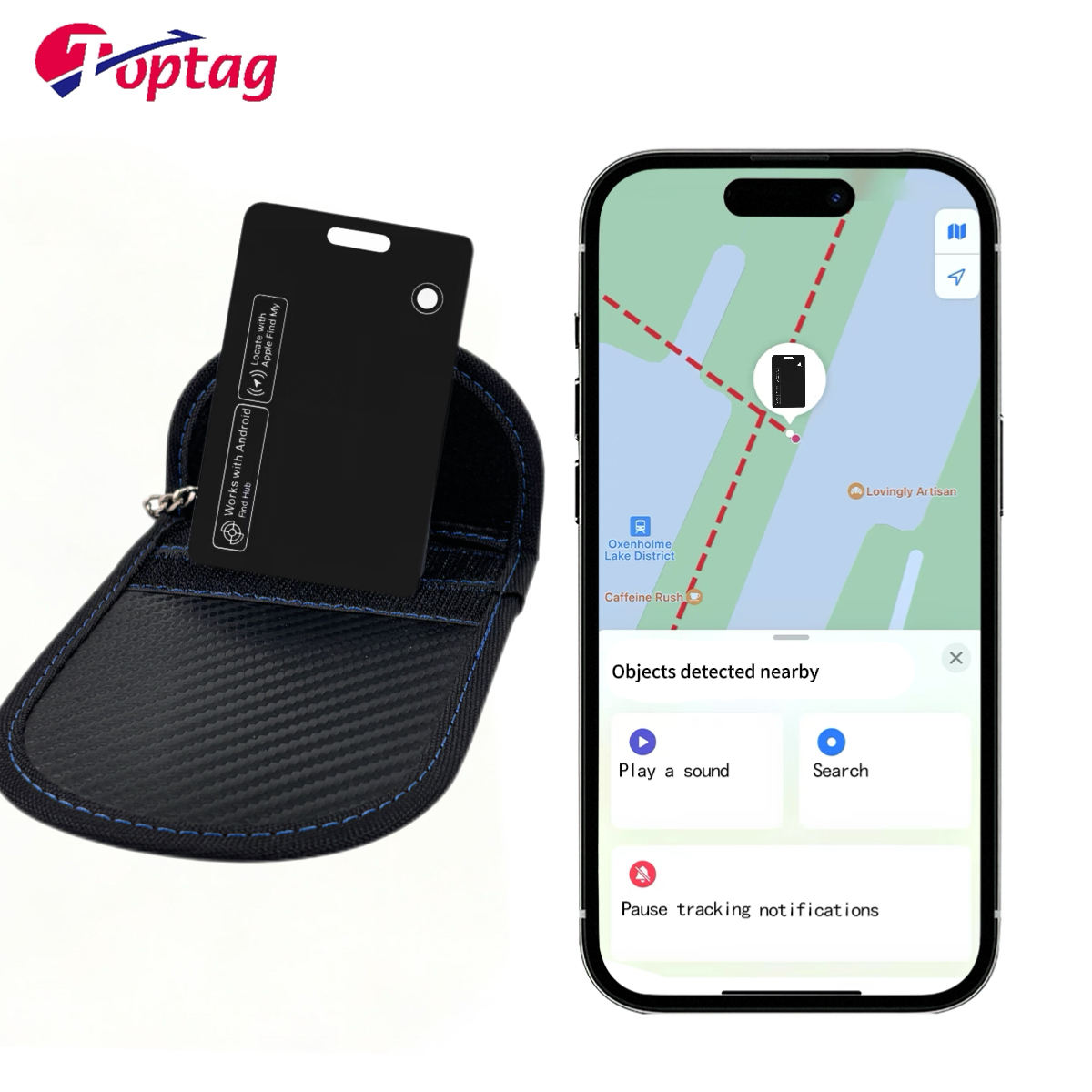
The RFID card sleeve is basically a thin layer that will prevent any scanning efforts from getting through, also known as RFID blocking. It accomplishes this by placing a layer inside the sleeve to disrupt the radio waves before they get to the card. It is important to know the RFID blocking material used in the sleeve or RFID wallets for men to make comparisons.
Simple materials that block RFID signals, like using aluminum foil block RFID attempts, can work in a pinch, but aren't durable for daily use. When shopping for protection, look for the best RFID blocking card rated for the 13.56MHz frequency, since that's the range most commonly targeted by unauthorized scanners. For men carrying several cards together, RFID wallets for men with built-in shielding combine storage and protection in one accessory.
Lost RFID Cards: What to Do Next
Finding a lost RFID card can seem difficult when it is a key that unlocks a restricted facility. These are the steps one takes for a lost RFID card:
- Alert the appropriate people in the facility to deactivate it.
- Get a new card that the system can replace and program quickly.
- Change access codes for those entry points controlled by a card that does not have personal identification.
- Check transactions on the card if it had an associated financial system.
It is also recommended that businesses keep a record of their deactivations as a delay in the procedure leaves the card operational longer than required.
How to Choose the Right RFID Card or Keyfob
Selecting the right format depends on a few factors:
- Frequency needs — 125kHz for basic access, 13.56MHz for encrypted use, UHF for long-range tracking
- Form factor — cards for printable ID and branding, keyfobs for durability and portability
- Chip protocol — Mifare, NTAG, or DESFire depending on your reader infrastructure
- Durability — standard PVC for offices, industrial-grade materials for harsh environments
- Customization — printing, numbering, or anti-counterfeiting features for branded programs
Matching these details to your existing reader system before ordering avoids compatibility issues down the line.
Why Choose Top Tag RFID Cards?
Top Tag has created and produced RFID products with factories located in Shenzhen and Hong Kong for customers in access control, logistics and retail industries. Every card and keyfob can be customized in chip type, material, size, and printing, backed by an in-house R&D team handling everything from prototyping to full production. Whether you need a batch of a standard RFID card, a tag made of materials that block RFID or a fully branded keyfob program, the team provides technical consulting alongside manufacturing built around your actual reader system.
Ready to upgrade your access control setup? Reach out to discuss your RFID tagging or best RFID blocking card requirements and get a custom quote tailored to your project.
FAQs
What are RFID cards, and how do they work?
They contain a chip and antenna that communicate wirelessly with a nearby reader, transmitting a unique ID that the system checks to grant or deny access.
Which RFID card is best for access control systems?
A 13.56MHz card using Mifare or NTAG chips offers a good balance of security and compatibility for most offices. Higher-security environments may need encrypted DESFire chips.
Can an RFID card be printed with photos, barcodes, or company logos?
Yes. Standard cards can be printed with full-color designs, photos, barcodes, QR codes, and serial numbers for both identification and access.
What is the difference between RFID cards and RFID tag cards?
The terms overlap, though "RFID tag card" often refers to cards used for tracking or asset management rather than solely for access.
Is an RFID keyfob compatible with the same readers as RFID cards?
Usually, yes — as long as the keyfob and card share the same frequency and protocol, they'll work with the same reader system.
What is an RFID card holder and sleeves used for?
Holders keep cards organized and protected from wear, while an RFID card sleeve adds signal-blocking protection against unauthorized scanning with RFID blocking material like aluminum foil block RFID.
Do RFID blocking card sleeves protect RFID cards from unauthorized scanning?
Yes. A sleeve with a conductive lining disrupts radio signals, preventing scanners from reading the card's data while it's inside.
What should I do if my RFID card is lost?
Report it to your facility manager immediately so it can be deactivated, then request a replacement to restore access.
Which industries commonly use an RFID card and RFID keyfobs?
Corporate offices, universities, hotels, gyms, healthcare facilities, and residential communities are among the most common users.
How do I choose the right RFID card for my application?
Consider your reader's frequency and protocol, how durable the card needs to be, and whether you need printing or customization before ordering.